
Energy Is Your Biggest Early Game Limitation
When you first start playing Stardew Valley, you’re fairly limited in what you’re able to do. This is a good thing, as you will quickly feel overwhelmed if everything was thrown at you all at once. One limitation you have is your energy.
Energy is the resource used to perform almost every action in Stardew Valley. Swinging an axe, breaking rocks with a pickaxe, tilling soil with a hoe, watering crops, and even fishing all consume energy.
If you mismanage your energy, some days can feel very short. You might run out by midday and suddenly find yourself wondering what to do with the rest of the day. While there are still activities that don’t require energy, running out too early can make your progress feel slow and leave you feeling unproductive.
The good news is there are plenty of ways to stretch your energy further and get more done each day. In this guide, I’ll show you some simple beginner-friendly tips that will help you make the most of your energy during your first few seasons.
Don’t Plant More Crops Than You Can Water
One of the most common beginner mistakes.
This is one of the most common mistakes new players make.
While it might seem like a good idea at the time, planting too many crops can quickly turn Stardew Valley into a chore.
The thought process is simple. You want to make more money, so you spend all of your gold on more seeds. Before long, you’ve planted over 100 crops and every single one needs watering each morning.
The problem is that watering crops costs energy.
If you’ve spent all your money on seeds, you probably don’t have much left over to buy food. Suddenly, half of your daily energy bar is disappearing before you’ve even left the farm.
It’s a mistake I made myself. I spent entire days searching for foraged food just so I could water my crops.
When this happens, you miss out on some of the best parts of the early game. Instead of exploring the mines, fishing, or clearing your farm, you’re spending most of your day watering crops and waiting for the next harvest.
So how should you go about planting crops?
I like to organise my crops into simple 3×3 sections containing 9 crops each.
During my first Spring, I usually work my way up to around six sections (54 crops total). This gives me enough crops to earn a steady income while still leaving plenty of time and energy for other activities.
At Farming Level 1 with no upgrades, watering 54 crops uses just under half of your maximum energy. If your crop plots are organised and close together, you can usually finish watering before 9am. This leaves plenty of time to do other activities.
If you’re just starting your first farm, I have a detailed Beginner Tips for Your First Spring guide that goes into detail about how I would plant my crops, as well as other useful tips.
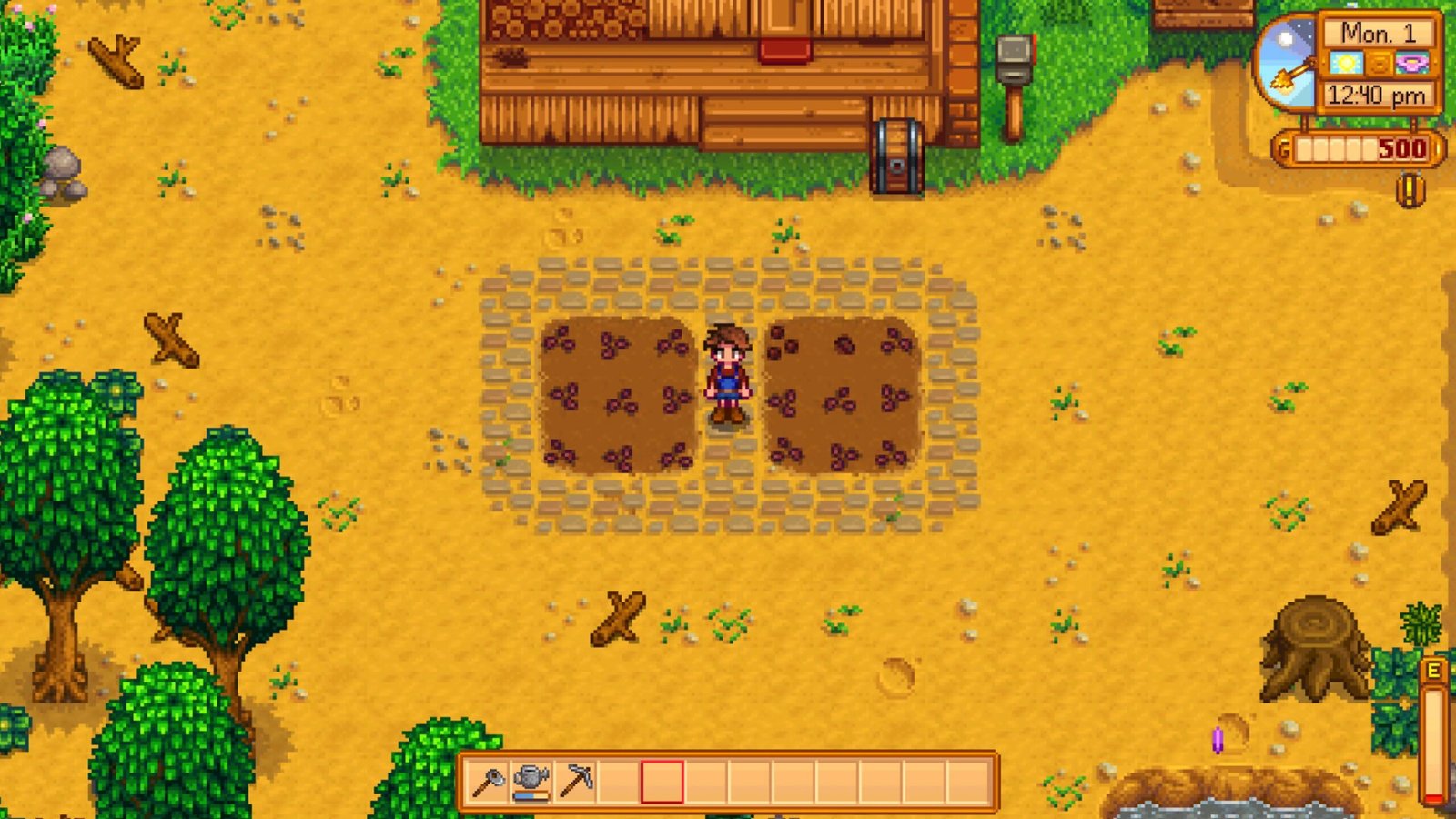
Two sections of 3×3, it’s clean and easy to manage
Bed Time Matters
A Brief Sleep tutorial.
Most players know that going to bed ends the day, saves the game, and awards any money earned from items placed in the shipping bin.
What many newer players don’t realise is that your bedtime can affect how much energy you have available the following day.
For every 10 minutes past midnight that you stay awake, you’ll restore less energy overnight. Stay up too late and you may wake up with a partially depleted energy bar, making it harder to water crops, clear your farm, or spend time in the mines.
If you stay out until 2am, you’ll pass out from exhaustion and be charged up to 1,000g for the inconvenience.
This doesn’t mean you should rush to bed at 8pm. In fact, making use of your available time is usually a good idea. However, if you’re consistently pushing right up against 2am, you’re effectively borrowing energy from tomorrow to get a little more done today.
When energy is already one of the biggest limitations in your first Spring, that’s usually a trade-off that isn’t worth making.
Use Your Energy, Not Your Time
Make the most of it.
Ideally, you want to use as much of your available energy as possible each day. If you arrive home at 10pm after a day of fishing and still have some energy left, consider spending it. Chop down a couple of trees, clear some weeds, or break a few rocks around the farm. It’s a small amount of extra progress, but those little gains add up over time.
On the other hand, if it’s only 11pm and you’ve completely run out of energy, there’s usually no reason to stay awake until 2am. At that point, you’re better off heading to bed and starting the next day with a full energy bar.
The goal isn’t to stay awake for as long as possible. The goal is to make your energy last for as much of the day as possible.
“You’re starting to feel exhausted”
When this warning appears and your energy bar begins shaking, it’s usually time to call it a night. Continuing to work while exhausted can quickly lead to passing out, losing money, and starting the next day at a disadvantage.
Use your energy wisely, then get some sleep and do it all again tomorrow.
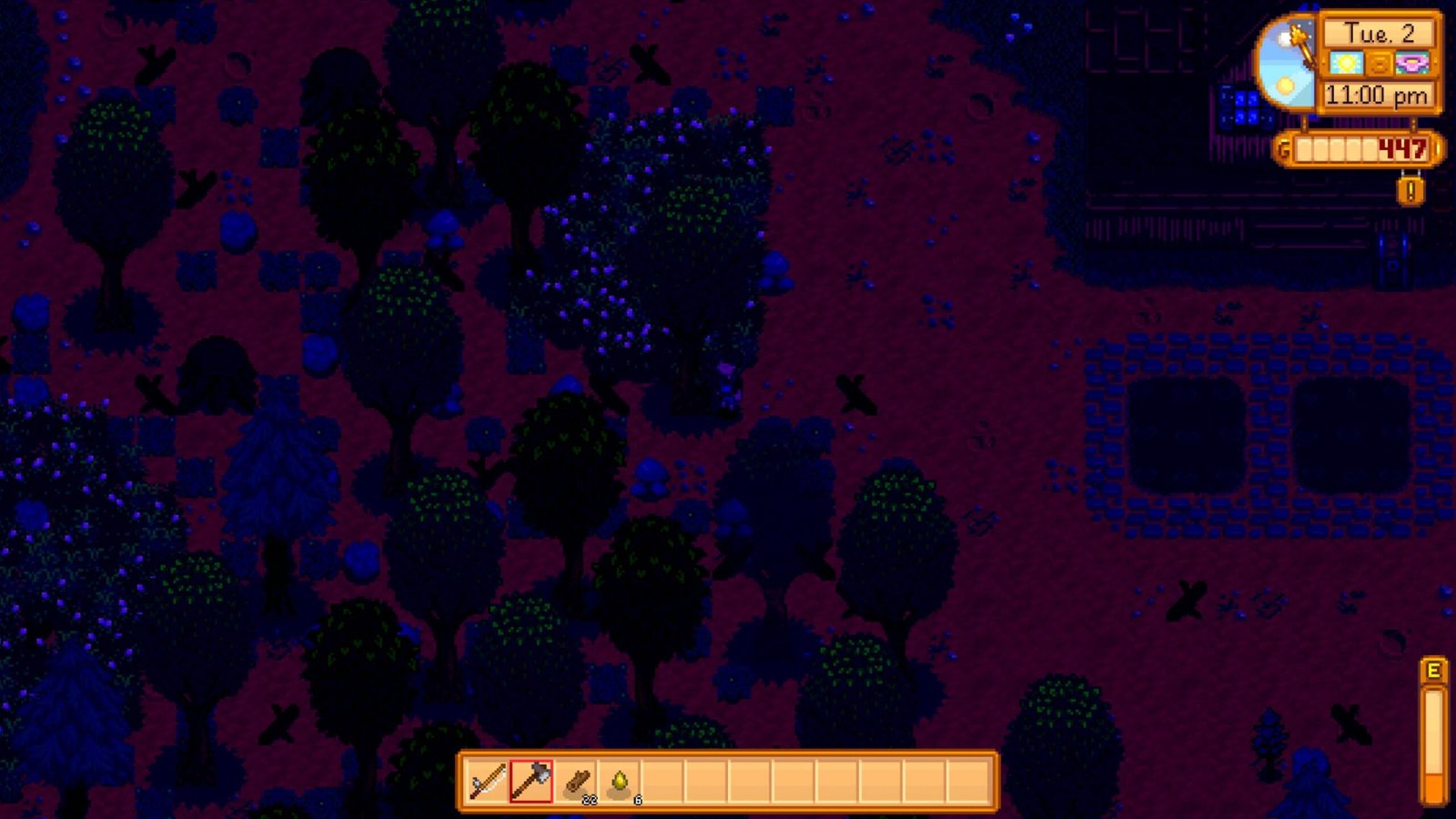
Even chopping down a tree can go a long way in the beginning
Don’t Always Sell Your Forage
Some things aren’t valued in Gold.
While foraging can provide a useful source of income in the early game, most forageables are actually more valuable as food than they are as items to sell.
Take the humble Leek as an example.
A base Leek sells for 60G, or alternatively provides us with 40 energy points. At fishing level 1 that 40 points would allow us five casts. If we assumed we got lucky and caught just five base Chubs, that would essentially mean we converted a Leek into five Chubs valued at 250G total, or 125 energy points total. Yes we would have to invest our time into catching them, but as I said earlier, you want to make the most of your day anyway.
If we were to sell the Leek to buy another food source, it still doesn’t pay off. If we went to Gus at the Saloon for example to buy Bread, it would cost us 100G for 50 energy. Willie’s Trout Soup is 250G for 100 Energy Points. That’s 5 energy per 10G for Bread, 4 energy for Trout Soup, and 6.6 energy for the Leek.
The humble Leek wins.
During your first Spring, I recommend keeping most of your forageables for yourself. The extra energy will usually help you earn more money than the forageable was worth in the first place.
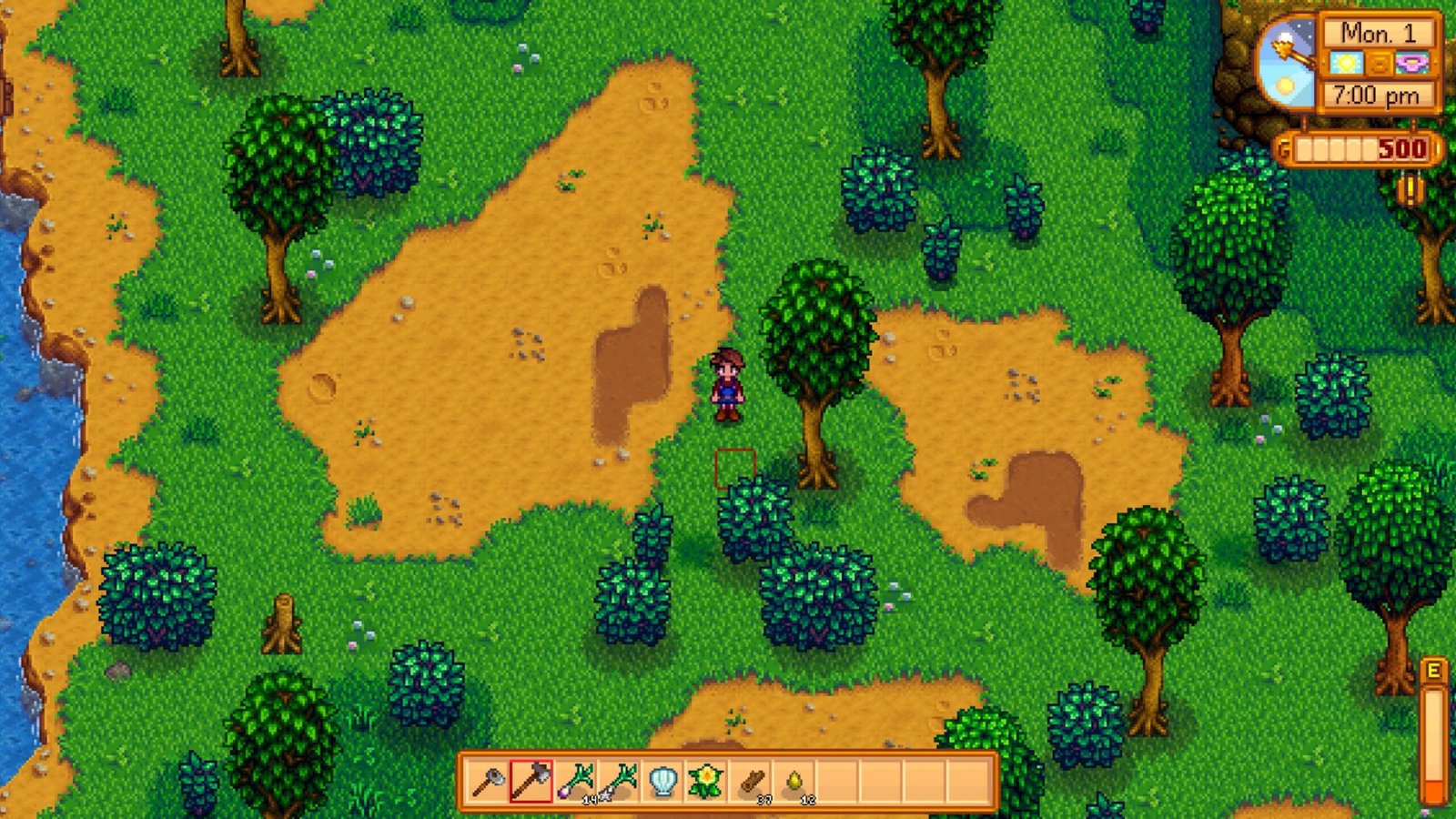
The Best Early Game Energy Sources
Because the more energy the better
Finding sources to replenish your energy doesn’t have to be hard. I’ve already mentioned that foraged items are best used as an energy source. But there are a few stand out options that you should know about.
Spring onions
Spring Onions can be found at the south east island of Cindersap Forest. What makes Spring onions great is they can usually be found in abundance, and they spawn in the same place. They also have a chance to respawn daily.
At base level they restore 13 energy, which may not sound like much, but as I said, they can be found in abundance. It’s not uncommon to find 10 or more right next to each other.
Field Snacks
These are underrated in the early game. While later in the game most tree seeds should be replanted, at the start there are so many trees already, you may as well craft a snack.
At foraging level 1, you are able to craft a Field snack with an acorn, a pine cone, and a maple seed. The field snack restores 45 energy, which is huge for something that’s practically free to craft. You need wood to craft almost everything of use, which means your going to be getting seeds anyway. That’s what makes Field Snacks one of the best early unlocks.
Salmonberries
Probably the best early game energy source you can find. They only spawn from 15-18th of Spring, and provide 25 energy points. I routinely collect well over 100 berries during these 4 days, and they only spawn at base quality. That means they only take up one inventory space.
You can walk around with well over 2500 energy all stored in one inventory space. With a starting maximum energy of 270, that essentially means you can walk around with upwards of 10 days worth of energy. This usually will last me well into the next season, making it incredibly worth your time to invest in picking them.
DAD TIP
Make your way down to find some Spring Onions, and pick Salmonberries along the way.
The Spa
After an earthquake happens sometime in Summer, you will gain access to the railroad and by extension, The Spa. Now I know it’s no longer Spring by this point, but I feel it’s worth mentioning that the spa can be a useful way to replenish your energy.
If you stand still in the spa, it will replenish both energy and health at 10 points per second. It’s free, doesn’t require you to ‘find’ anything like forageables. The downside is that you have to actually travel there, put on your togs, and stand still in order for it to work. You lose time, but if you don’t have any other ways to replenish energy, it’s an option.
Conclusion
You’re bound to make mistakes during your first season in Stardew Valley, but hopefully these tips will help you make the most of your limited energy.
Plant a manageable number of crops, keep your forageables, gather Salmonberries when they appear, and don’t be afraid to turn tree seeds into Field Snacks.
If you can consistently stretch your energy bar from 6am until late evening, you’ll find yourself making far more progress than players who spend half their day exhausted.
More Stardew Valley Guides
If you found this guide helpful, you might also enjoy: